
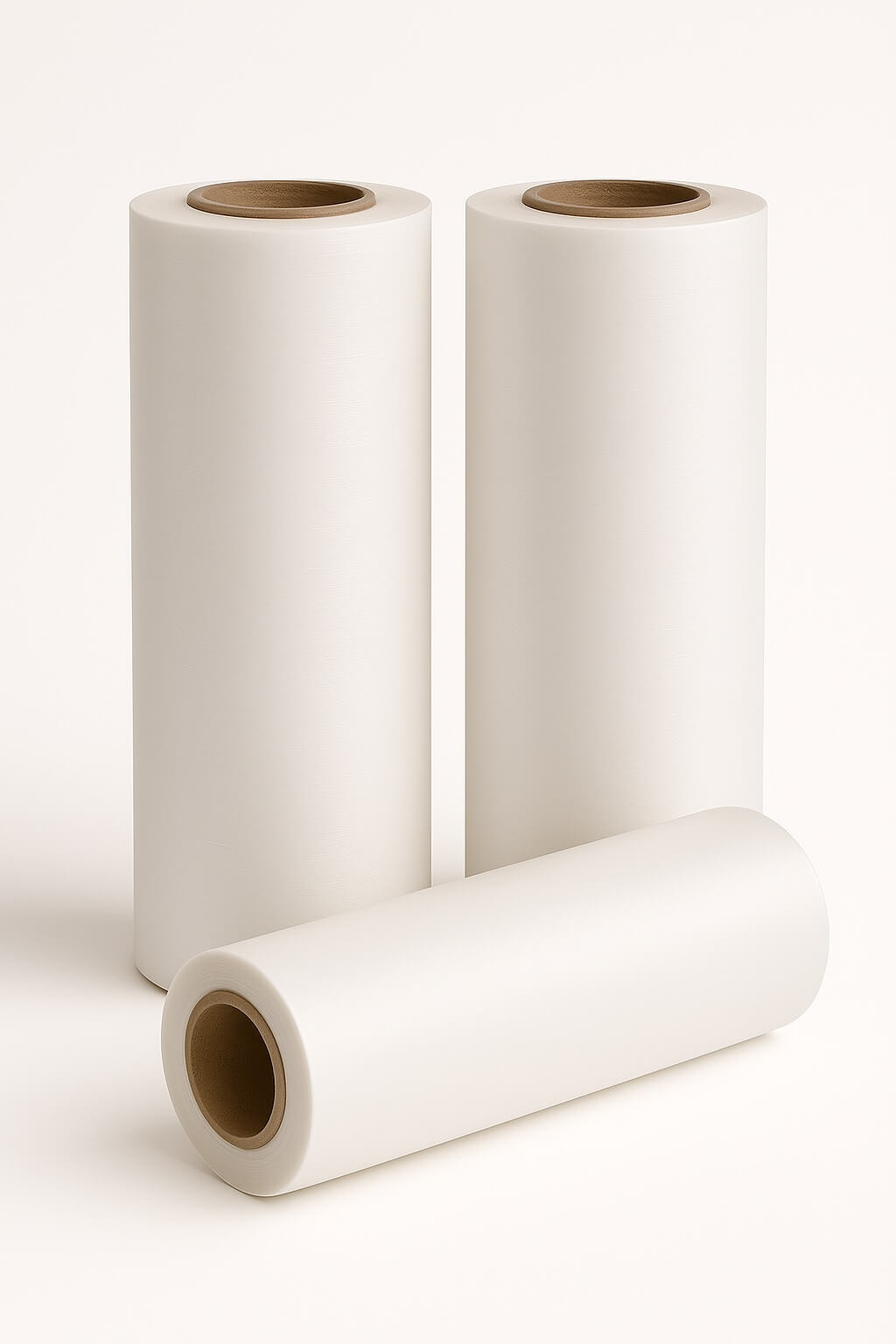
Description
Frosted BOPP film delivers the premium matte aesthetic that cosmetics, boutique food, and gift packaging brands consistently choose when they want their products to stand out on shelf. The frosted surface is created during the biaxially oriented polypropylene manufacturing process, producing a consistent, fine-textured matte finish that diffuses light evenly across the entire film width rather than in patches or streaks.
Unlike laminated matte coatings that can delaminate over time, the frosted effect in this film is integral to the structure. It holds up through converting, printing, and distribution without any special handling requirements. The film is available in both non-sealable grades for lamination and overwrap, and thermosealable grades for direct use on form-fill-seal packaging equipment.
Print and Processing Performance
The frosted surface is corona treated to ensure strong adhesion with flexographic, gravure, and UV printing systems. The matte background can actually enhance colour saturation and contrast in printed graphics compared to high-gloss transparent film, because it eliminates the specular reflection that washes out fine ink detail. Selective UV spot-gloss can be applied over the matte base to create sophisticated visual contrast – a technique popular among premium food and cosmetic brands across Europe.
Slip properties are maintained at levels suitable for high-speed automatic packaging machinery. Tensile strength and elongation figures are comparable to standard BOPP, so line speed and setup parameters typically require no adjustment when converting from a transparent to a frosted grade.
Frequently Asked Questions
What is the difference between frosted BOPP and matte BOPP film?
The terms are often used interchangeably. Both describe a BOPP film with a low-gloss, light-diffusing surface. Some suppliers use “frosted” to indicate a slightly more translucent look and “matte” for a more opaque one, but this varies by manufacturer. If you have a specific gloss level target (measured in gloss units at 60 degrees), NovoPacks can supply samples and technical data sheets for comparison.
Is frosted BOPP film suitable for food contact packaging?
Frosted BOPP film can be produced to comply with EU Regulation (EC) No 10/2011 for food contact applications. Please confirm your specific food contact requirement with NovoPacks at the time of enquiry to ensure the correct certified grade is supplied. Some specialty frosted grades intended for non-food applications may not carry food contact approval.
Can frosted BOPP be heat-sealed?
Yes. Thermosealable frosted BOPP grades include a heat-sensitive coating on one or both surfaces and are compatible with standard form-fill-seal packaging machinery. Non-sealable frosted BOPP is used where the package is closed by adhesive lamination, folding, or overwrapping rather than direct heat sealing.
How well does frosted BOPP film print?
Frosted BOPP prints extremely well with flexographic and gravure inks. The matte surface absorbs ink more evenly than a glossy film, producing rich, consistent colour output. It is compatible with water-based, UV, and solvent-based ink systems. For best results, ensure the surface dyne level is confirmed before printing, as some converting or storage conditions can reduce corona treatment effectiveness over time.
What thicknesses does frosted BOPP film come in?
Standard thicknesses range from 20 to 40 microns. Lighter gauges are used for label face stock and lightweight overwrap, while heavier gauges are preferred for bags, stand-up pouches, and carton overwrapping where stiffness and handling rigidity matter. Contact NovoPacks for availability in your required width and core size.