
Description
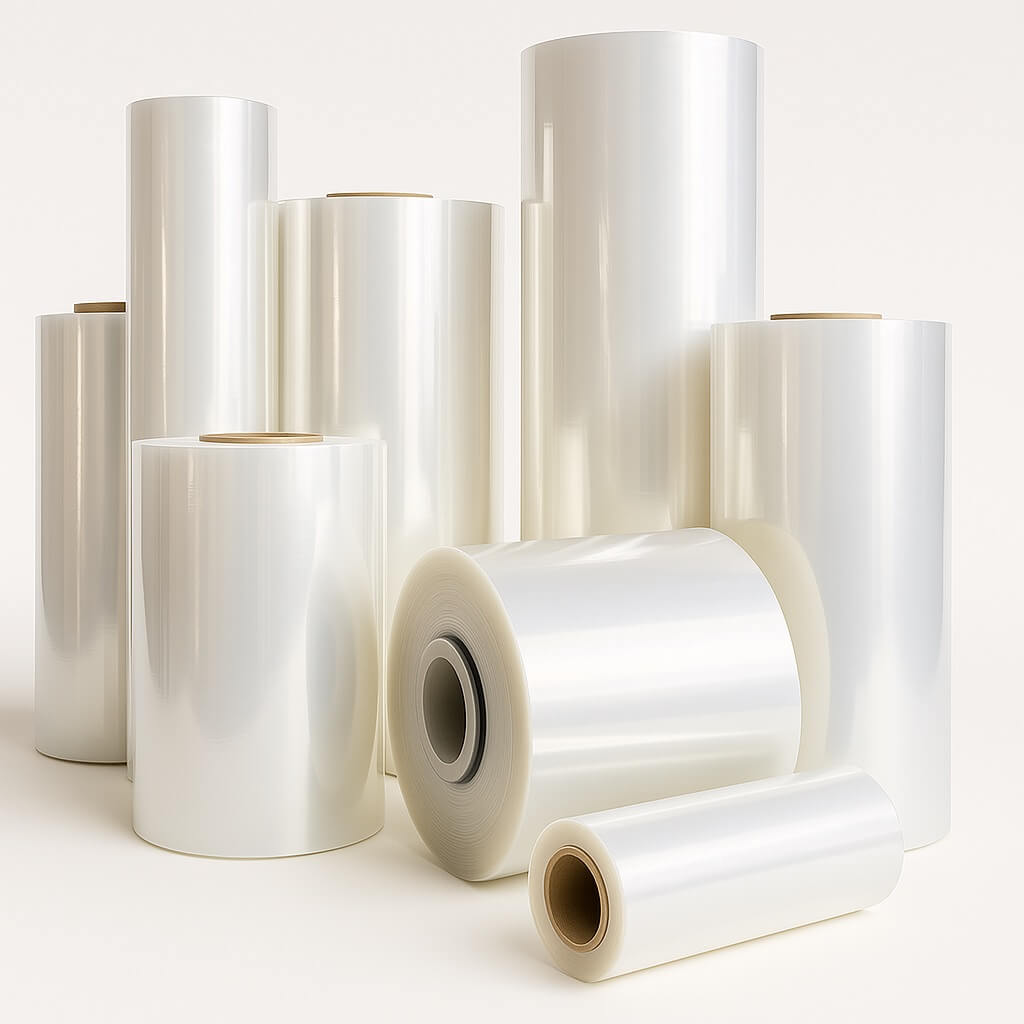
Non-sealable transparent BOPP film is the foundational material of the flexible packaging and label converting industries. It is produced without a heat-sealable surface coating, which means it is not intended for direct sealing on packaging machines. Instead, it is used as a high-performance substrate for lamination, overwrapping, window film applications, and twist-wrapping – applications where its exceptional clarity, stiffness, and dimensional stability are the primary requirements.
Compared to sealable grades, non-sealable transparent BOPP often has tighter surface energy specifications optimised for specific adhesive or lacquer systems. It is the film of choice for packaging converters building multi-layer laminates, where it provides the structural clarity and stiffness of the outer ply, with a separate sealable film or adhesive providing the inner seal layer. This separation of functions allows each component of the laminate to be optimised for its specific role.
Performance in Converting and Printing
The film accepts solvent-based, water-based, and UV printing inks without priming in most cases, provided the surface corona treatment is within the required dyne level range. It is a preferred substrate for gravure printing of transparent packaging where very high print quality and colour consistency are needed across long production runs. After printing, it can be laminated to polyethylene, CPP, or other sealable films using solvent or solventless adhesive systems to create functional flexible packaging structures.
For overwrapping applications such as cigarette packaging, gift wrap, and stationery overwrap, non-sealable transparent BOPP provides the crisp, clear appearance and snap-back characteristic that distinguishes high-quality overwrapped products. The film can be split-oriented or standard-oriented depending on the directional tear performance required by the application.
Frequently Asked Questions
What is the main difference between sealable and non-sealable BOPP film?
Thermosealable BOPP film has a heat-sensitive coating on one or both surfaces that allows it to bond to itself or a compatible film under heat and pressure on a packaging machine. Non-sealable BOPP does not have this coating and cannot form a heat seal directly. Non-sealable film is used where the package closure is achieved through adhesive lamination, cold glue, or mechanical means – or where the film is the outer layer in a laminated structure whose inner layer carries the seal function.
What is BOPP film used for in overwrapping?
In overwrapping, a flat or pre-cut sheet or continuous web of BOPP film is wrapped tightly around a box, book, or carton and sealed using a heat knife or adhesive on the overlapping edges. The high stiffness and snap-back tendency of BOPP makes it ideal for this application because the wrapped package has a tight, drum-like feel that communicates quality to the end consumer. Common overwrap applications include cosmetic sets, playing card boxes, gift packs, and premium food gift sets.
Can non-sealable BOPP film be used as a lamination substrate?
Yes, this is one of its primary applications. Non-sealable transparent BOPP is printed and then laminated to a sealable inner web – typically polyethylene or cast polypropylene – using a solventless or solvent-based adhesive laminator. The resulting structure combines the clarity and stiffness of BOPP with the sealing performance and flexibility of the inner film, making it suitable for a very wide range of food and non-food flexible packaging formats.
What thicknesses are available for non-sealable transparent BOPP film?
Non-sealable BOPP is commonly available from 12 to 50 microns. Very thin gauges (12-15 microns) are used in laminates where weight and material cost are the primary drivers. Standard thicknesses (18-25 microns) are used for most printing and lamination applications. Thicker gauges provide additional stiffness for overwrapping and specialty applications. NovoPacks can advise on the appropriate specification for your converting process.
Is non-sealable transparent BOPP film suitable for twist-wrapping confectionery?
Yes. Non-sealable transparent BOPP is widely used for individual twist-wrapping of hard-boiled sweets, toffees, and small chocolates. The film has the stiffness to hold a twist without unravelling and the clarity to showcase the product. Specific twist-wrap grades are optimised for dead-fold performance – the ability of the film to remain in the twisted position without spring-back – which is critical for the reliability of twist-wrap packaging on high-speed wrapping machines.