
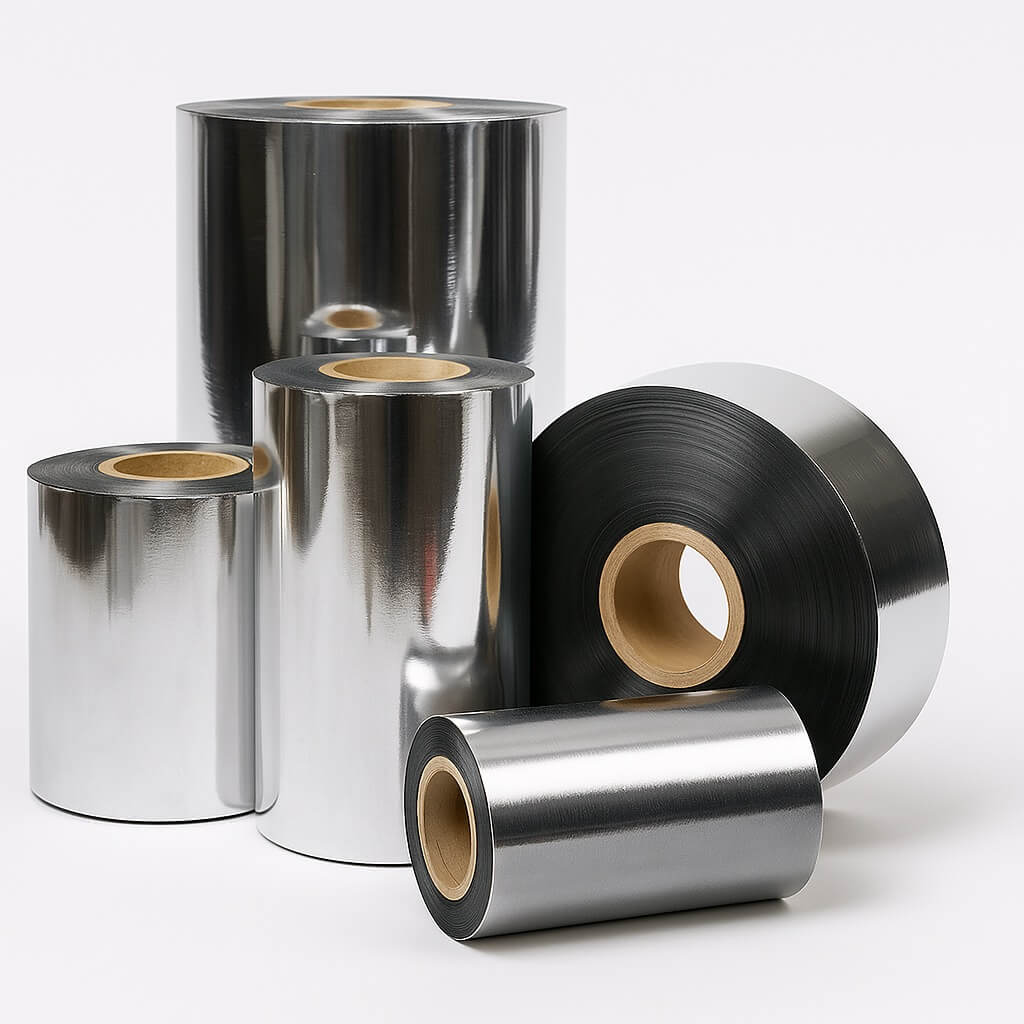
Description
Thermosealable metallized aluminum BOPP film delivers the barrier properties and reflective metallic appearance that demanding food and specialty packaging applications require, while remaining lightweight, flexible, and fully compatible with high-speed form-fill-seal packaging lines. The film consists of a biaxially oriented polypropylene substrate with a vacuum-deposited aluminium metallization layer, topped with a heat-sealable coating that allows direct sealing on the packaging machine without additional converting steps.
The aluminium metallization layer dramatically reduces the film permeability to both moisture vapour and oxygen compared to standard transparent BOPP. This barrier improvement extends product shelf life and helps preserve aroma compounds in coffee, tea, and flavoured snack products – areas where barrier performance directly impacts consumer satisfaction and retail returns.
Barrier Performance and Applications
Metallized BOPP film is a cost-effective alternative to full aluminium foil laminates in applications where the barrier requirement is significant but not at the extreme end of the scale. It provides substantially better barrier performance than transparent or white BOPP film while remaining lighter and easier to recycle than foil-based laminates. The metallic appearance also delivers strong shelf impact and is associated with quality and freshness in the minds of European consumers.
The heat-sealable coating is engineered for clean, reliable sealing on VFFS and HFFS machinery at standard jaw temperatures. Seal integrity is critical for barrier packaging – and the consistent seal performance of this film ensures the barrier layer is not compromised at the package closure.
Frequently Asked Questions
How does metallized BOPP film compare to aluminium foil laminate?
Aluminium foil laminates provide a near-absolute barrier to oxygen and moisture and are used for the most sensitive products requiring long shelf lives. Metallized BOPP film offers good but not total barrier properties – its oxygen transmission rate is significantly lower than plain BOPP but higher than foil. For most snack, coffee, and confectionery applications, metallized BOPP provides adequate shelf life extension at lower cost and weight than foil-based structures. Your packaging technologist can advise on the right barrier level for your product.
Is thermosealable metallized BOPP film food-safe?
Yes. Food contact grades comply with EU Regulation (EC) No 10/2011 on plastic materials and articles intended to contact food. The aluminium metallization layer does not come into direct contact with food in most packaging formats where the film is used with the sealable layer facing inwards. Please confirm your specific application configuration with NovoPacks at the point of enquiry.
Can metallized BOPP film be printed?
Yes. The outer surface of metallized BOPP film can be printed using flexographic or gravure methods. The metallic base acts as a reflective background that enhances colour brightness and gives printed graphics exceptional shelf presence. Reverse printing – where ink is applied to the underside of a transparent film that is then laminated to the metallized layer – is also widely used to protect the printed graphics from abrasion.
Is metallized BOPP film recyclable?
Metallized BOPP film contains a very thin layer of aluminium – typically around 30 to 50 nanometres – which is a tiny fraction of the total film weight. In many European recycling streams, the film is classified as a polypropylene material despite the metallization, and its recyclability in practice depends on the local sorting and processing infrastructure. Detectable and sortable metallized BOPP films compatible with advanced recycling systems are also available – contact NovoPacks to discuss options for your sustainability targets.
What thicknesses are available for thermosealable metallized BOPP film?
Typical thicknesses range from 18 to 30 microns, with the metallization layer contributing negligibly to overall gauge. Thinner films are lighter and lower in cost, while thicker films provide greater stiffness and better machinability on packaging lines running at very high speeds. NovoPacks can advise on the optimal gauge for your specific format and line speed.