
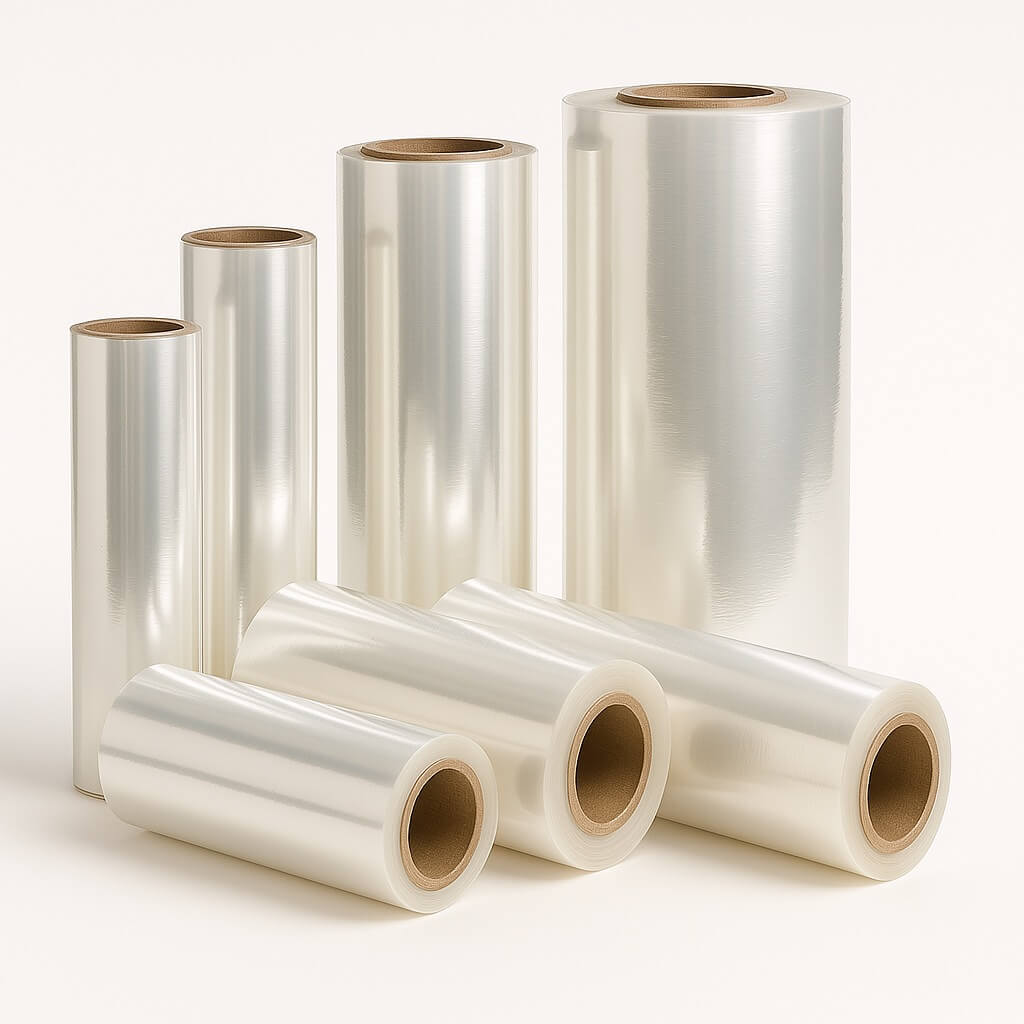
Description
Thermosealable transparent BOPP film is one of the most widely used flexible packaging materials in the food and consumer goods industries across Europe. It combines the outstanding optical clarity and moisture resistance that biaxially oriented polypropylene is known for with a heat-sealable coating that allows the film to be run directly on form-fill-seal packaging lines. The result is a cost-efficient, hygienic, and visually attractive solution for a broad range of packaging formats.
The film achieves a seal initiation temperature typically between 90 and 115 degrees Celsius, making it compatible with high-speed wrapping and pouch-forming machinery. Clean, consistent seals reduce packaging waste and line downtime. The thermosealable coating is available on one or both surfaces depending on the pouch or bag format required.
Technical Properties and Compliance
Light transmission exceeds 90%, giving end consumers clear visibility of the packaged product. The moisture vapour transmission rate is substantially lower than polyethylene film of comparable thickness, providing reliable humidity protection for dry goods. The film performs consistently across the temperature ranges typical of European ambient and cold-chain distribution networks.
All grades supplied by NovoPacks comply with EU Regulation (EC) No 10/2011 on plastic materials intended to contact food. The film is suitable for direct contact packaging of confectionery, bakery products, snack foods, and fresh produce without additional migration testing steps for most standard applications.
Frequently Asked Questions
What makes BOPP film thermosealable?
Standard BOPP film has a non-polar surface that will not fuse to itself under heat alone. A thermosealable BOPP film receives a coextrusion or lacquer coating of a heat-sensitive polymer – typically acrylic or EVA-based – on one or both surfaces during manufacture. When two sealable surfaces are pressed together with heat and pressure on a packaging machine, a strong, reliable bond forms.
At what temperature does thermosealable BOPP film seal?
Seal initiation temperature for most standard grades falls between 90 and 120 degrees Celsius. This is meaningfully lower than many alternative films, which reduces energy use and supports faster line speeds. The exact setting will depend on your packaging machine jaw pressure and dwell time – your machine supplier or NovoPacks can advise on the optimal parameters.
Is thermosealable transparent BOPP film food-safe?
Yes. Grades supplied by NovoPacks comply with EU Regulation (EC) No 10/2011 covering plastic materials and articles intended to contact food. The film is approved for contact with dry, fatty, and moist food categories. For applications with stricter compliance requirements, product-specific migration test reports can be provided on request.
Can this film be printed before sealing?
Yes. The non-seal surface accepts flexographic and gravure printing inks reliably, and the surface corona treatment is maintained throughout the roll life. Most European converters print and slit the film before it reaches the form-fill-seal line, achieving high-resolution full-colour graphics without any additional priming step.
What thicknesses are available for thermosealable transparent BOPP film?
Common thicknesses range from 15 to 40 microns. Thinner gauges suit lightweight confectionery wraps and twist-wraps, while thicker options provide the stiffness needed for stand-up pouches, pillow packs, and heavier bakery products. NovoPacks can advise on the best gauge for your specific application and packaging equipment.