
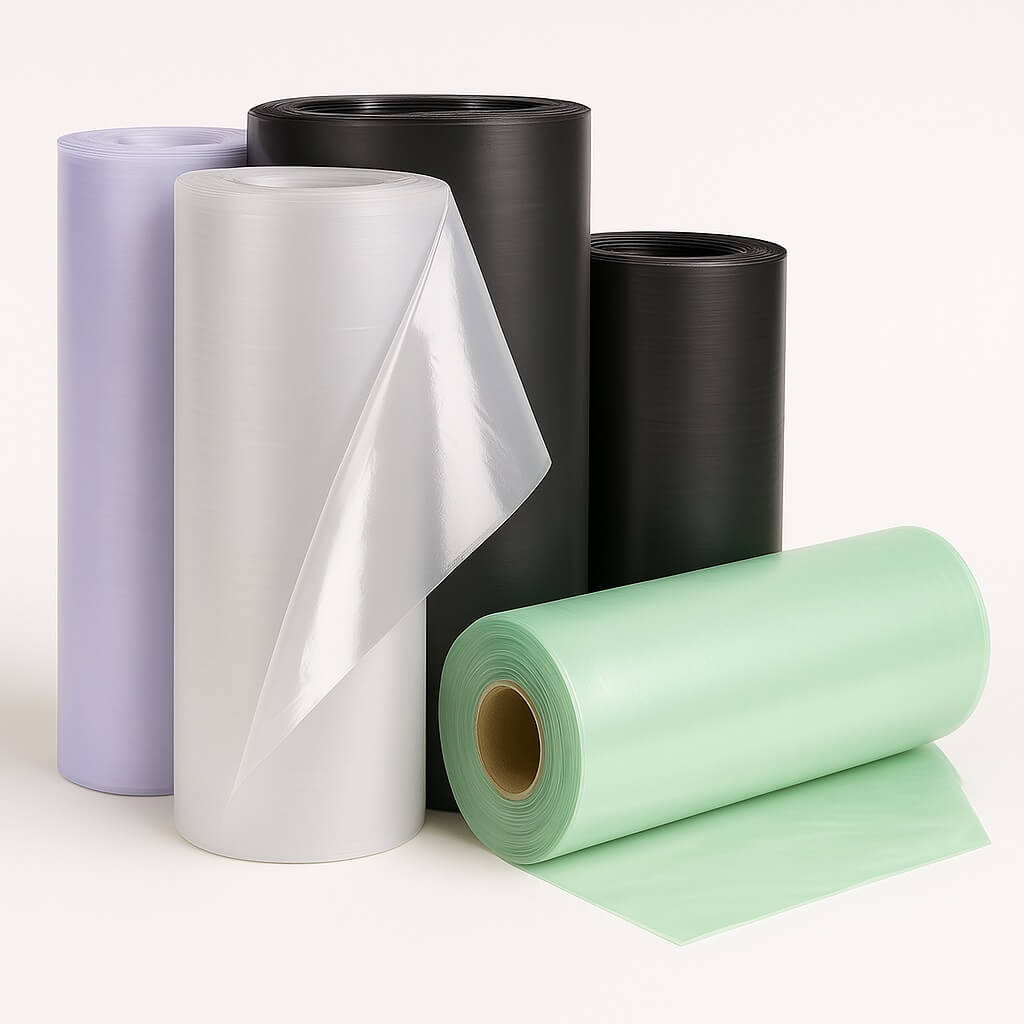
Description
Converter-grade blown polyethylene film rolls are large-format master rolls of polyethylene film supplied to packaging converters, bag manufacturers, and industrial film processors who slit, print, laminate, or further process the film before selling it as a finished packaging product. Unlike retail-packaged film products designed for end users, converter-grade film is produced to the tight specifications that converting and printing processes demand – consistent gauge across the web, stable mechanical properties, and surface treatment appropriate for the intended converting operation.
Blown polyethylene film is produced by extruding molten PE polymer through a circular die to form a tube, which is then inflated with air to form a bubble. The bubble is collapsed and wound into a flat layflat roll, or slit into single-wound sheets. The blown extrusion process produces film with higher tear resistance, better puncture resistance, and more consistent properties in all directions compared to cast film of the same polymer, making it particularly suited to heavy-duty bag manufacture and applications where film toughness is more important than optical clarity.
Polymer Options and Applications in Converting
Converter-grade blown PE film is available in LDPE (low-density polyethylene), LLDPE (linear low-density polyethylene), and blended formulations. LDPE produces softer, more flexible film with good sealing properties and is used for general-purpose bags and lightweight packaging. LLDPE produces tougher film with higher tensile and puncture resistance and is preferred for heavy-duty bags, pallet covers, and stretch applications. Blended formulations combine the seal strength of LDPE with the toughness of LLDPE and are widely used in the European converter industry for multi-purpose bag stock.
Film is available with one or two corona-treated surfaces for ink adhesion in flexographic bag printing. Natural (clear), black, and coloured master batches can be incorporated during extrusion. NovoPacks supplies on a range of core widths and layflat dimensions to suit the slitting and bag-making equipment used across the European converting industry.
Frequently Asked Questions
What is the difference between blown and cast polyethylene film?
Cast polyethylene film is produced by extruding molten polymer onto a chilled roll, producing a clear, glossy film with good optical properties and consistent thickness. Blown film is produced by the bubble extrusion process and has lower clarity but higher tear and puncture resistance in all directions. For converter applications where film toughness matters more than optical clarity – such as heavy-duty bags, agricultural film, and industrial packaging – blown PE is almost always the preferred choice.
What polymer grades are available for converter-grade blown PE film?
The most common options are LDPE (softer, good seal strength), LLDPE (tougher, better puncture resistance), and blended grades combining both properties. Recycled content grades using post-industrial or post-consumer recycled polyethylene are also available for converters working to reduce the virgin plastic content of their film products in line with EU sustainability targets. Please contact NovoPacks with your application requirements for a recommendation on the appropriate resin base.
What widths and thicknesses are available for converter-grade blown PE film?
Layflat widths for converter rolls typically range from 500mm to over 3000mm. Film thickness ranges from around 20 microns for lightweight applications to 200 microns or more for heavy-duty industrial film. The exact range available from NovoPacks depends on current production schedules and stock – contact the sales team with your specific requirements for current availability and lead time.
Is corona treatment available on converter-grade blown PE film?
Yes. One or both surfaces can be corona treated to increase surface energy and ensure reliable adhesion of printing inks, lamination adhesives, and surface coatings. The target dyne level should be specified at the time of order to ensure it matches the ink or adhesive system used in your converting process. Surface dyne level can decrease over time in storage, so the time from production to use in converting should be considered when specifying the treatment level.
Can converter-grade blown PE film include recycled content?
Yes. Recycled content blown PE film is available using post-industrial recycled (PIR) polyethylene, and in some grades, post-consumer recycled (PCR) polyethylene. Recycled content grades may have slightly different mechanical properties and appearance compared to virgin resin grades – clarity may be reduced and there may be more colour variation. For applications where appearance is less critical, such as black bin liners, waste sacks, or industrial packaging, recycled content grades offer a cost and sustainability advantage. NovoPacks can advise on the available recycled content options and their suitability for your converting application.