
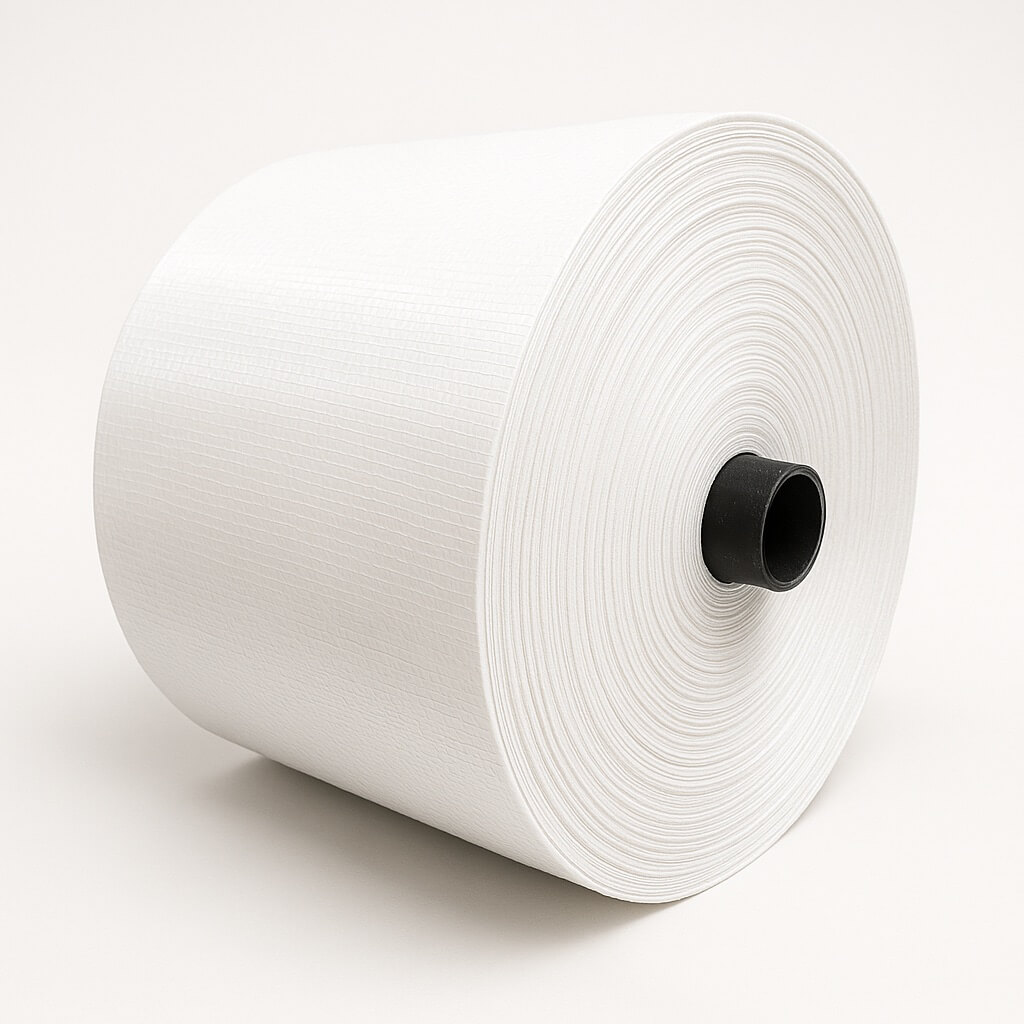
Description
Polypropylene woven fabric rolls are the base material from which PP woven bags, sacks, tarpaulins, ground covers, and technical textiles are manufactured. The fabric is produced by weaving flat polypropylene tapes on circular or flat looms into a strong, dimensionally stable textile that inherits the excellent chemical resistance, low moisture absorption, and high tensile strength of the polypropylene polymer in a flexible, workable web form. NovoPacks supplies PP woven fabric in roll form to bag manufacturers, industrial converters, construction material producers, and agricultural suppliers across Europe.
The fabric is available in a range of weights from 50 to over 200 grams per square metre, covering applications from lightweight agricultural ground covers through to heavy-duty tarpaulins and industrial separation fabrics. Fabric width varies from narrow widths suitable for bag production to wide widths used for groundsheet and cover applications. Both uncoated and PE-laminated (one or two sides) grades are available depending on the barrier and bonding requirements of the end application.
Key Properties and Grades Available
The fundamental properties of PP woven fabric – high tensile strength in both warp and weft directions, resistance to most common acids and alkalis at ambient temperatures, near-zero moisture absorption, and good UV stability in stabilised grades – make it suitable for a very wide range of industrial and agricultural uses. Tape count (number of tapes per 10cm in warp and weft) is the primary structural specification, with higher counts producing stronger, finer-weave fabrics at a given weight per square metre.
UV-stabilised grades incorporate light stabilisers into the polypropylene tape during extrusion, extending the service life of the fabric when used in outdoor applications. Without UV stabilisation, PP fabric can become brittle and lose tensile strength after prolonged sun exposure. For agricultural ground covers, construction site fabrics, and outdoor tarpaulins, UV stabilisation is standard.
Frequently Asked Questions
What is polypropylene woven fabric used for?
PP woven fabric in roll form is primarily used as an input material for manufacturing other products. Bag and sack manufacturers use it to cut, stitch, and form woven PP bags. Agricultural suppliers convert it into weed control fabric, ground cover membrane, and crop protection material. The construction industry uses it as damp-proof membrane backing, scaffolding debris netting, and site protection covering. Industrial uses include geotextile separation layers, container liner material, and heavy-duty tarpaulins for equipment and cargo covering.
What is the difference between coated and uncoated PP woven fabric?
Uncoated PP woven fabric has small openings between the woven tapes that allow limited air and water movement through the fabric. This is beneficial for some applications – such as weed control fabric where water permeability is needed – but a disadvantage where a waterproof barrier is required. Coated fabric has a thin LDPE or HDPE film laminated to one or both surfaces, closing the openings and creating a waterproof, more durable surface. Laminated fabric is used for tarpaulins, wrapping, and bags requiring moisture protection.
What fabric weights are available and how do I choose the right one?
PP woven fabric is available from around 50 g/m2 for lightweight ground covers and protection films up to 200 g/m2 or more for heavy-duty tarpaulins and industrial fabrics. For bag and sack production, typical fabric weights are 70 to 120 g/m2 depending on the bag size and fill weight. For weed control membranes, 50 to 80 g/m2 is standard. For heavy covers and tarpaulins, 120 g/m2 or above is typical. NovoPacks can advise on the appropriate weight for your intended application and expected service life.
Is UV-stabilised PP woven fabric necessary for outdoor applications?
Yes, for any application where the fabric will be exposed to sunlight for more than a few weeks, UV stabilisation is strongly recommended. Unstabilised PP fabric can lose up to 50 percent of its tensile strength after a few months of outdoor exposure in European summer conditions. UV-stabilised grades are rated for service lives typically ranging from one to five years depending on the stabiliser loading – this should be matched to the expected service duration of your application.
Can PP woven fabric rolls be printed?
Yes. PP woven fabric can be flexographically printed before or after lamination. Printing is used for branding on bag-making fabric, warning and safety markings on construction fabrics, and product identification on agricultural and industrial applications. Print adhesion and quality depend on the fabric surface and whether a lamination is present – NovoPacks can advise on the appropriate surface treatment and printing method for your fabric specification and end use.